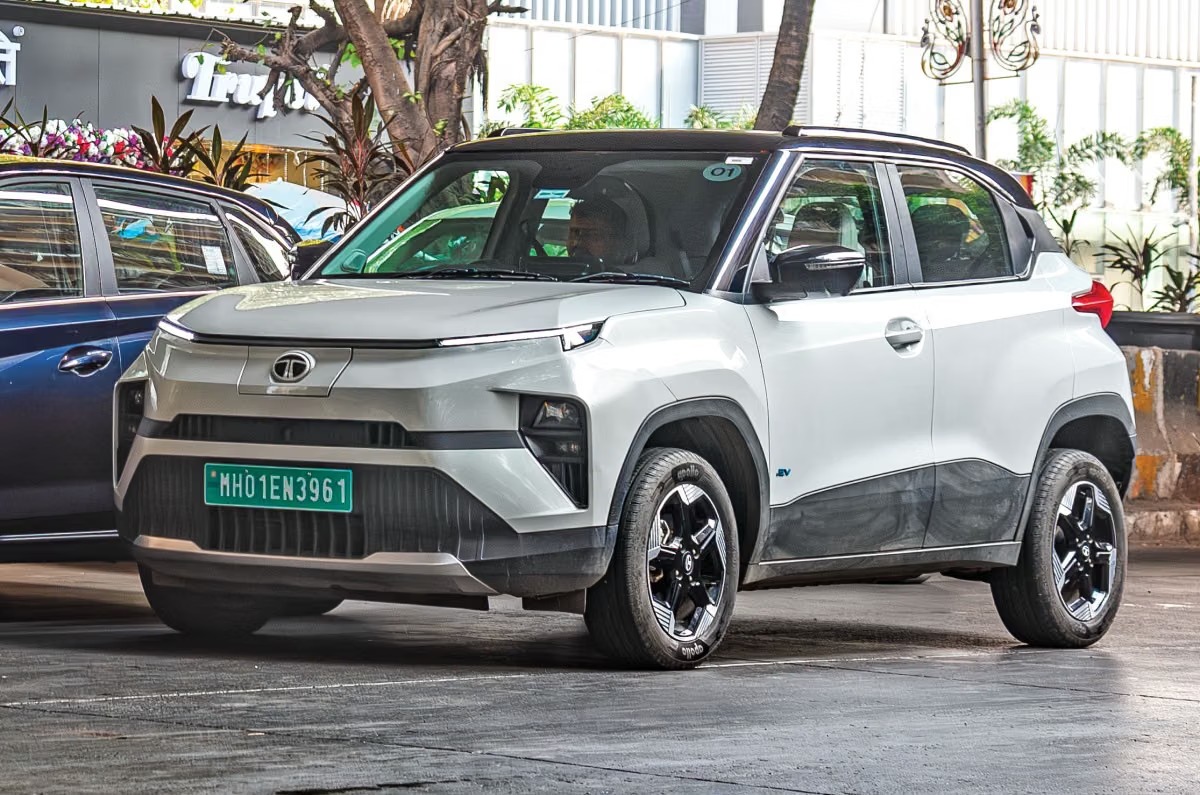
The Tata Punch EV 2025 is Tata Motors’ answer for Indian buyers who want a small electric SUV with practical range, modern tech and low running costs. It combines the popular Punch sub-compact SUV’s design with a full electric powertrain. From city commutes to occasional highway drives, the Punch EV fits well. In this detailed guide we explore the Tata Punch EV 2025, covering battery range, charging options, features, safety, real-world cost and what it means for India’s EV buyers.
Tata Punch EV 2025 Quick Specifications
| Specification | Details |
|---|---|
| Battery Options | Approx. 25 kWh / 35 kWh |
| Claimed Range (MIDC) | ~315 km (25 kWh) / ~421 km (35 kWh) |
| Motor Output | ~90 kW (~120 PS) |
| Torque | ~190 Nm (estimate) |
| Charging | AC home wallbox (3.3 kW/7.2 kW), DC fast charging (CCS) |
| 10-80% DC Charging Time | ~30-60 minutes (depending on charger and battery pack) |
| Vehicle Type | 5-Seater Electric Compact SUV |
| Boot Space | Practical for daily use (~300+ litres) |
| Ground Clearance | SUV-level, suitable for Indian roads |
| Safety Features | Multiple airbags, ESC, AEB (on higher trims) |
| Warranty | 3-Year vehicle; Battery & Motor warranty up to 8 years (program dependent) |
| Indicative Price (India) | From around ₹9.99 lakh ex-showroom for base EV trims |
Why the Tata Punch EV 2025 Matters for India
India is shifting towards electric vehicles (EVs). Buyers are looking for cars that work in city traffic, offer lower running cost, and still give SUV style. The Punch EV 2025 fills this niche. It takes the design and popularity of the TATA Punch petrol model and adds electric drive. Tata’s strong dealer network, growing EV service coverage and battery warranty programs make this electric SUV realistically usable for many Indian families. It brings value in the compact SUV EV segment. The Punch EV helps accelerate adoption of electric mobility in India.
Design and Exterior Appeal

The Tata Punch EV retains the stylish SUV look of the regular Punch. From the front it has a slightly reworked grille (often closed or with unique EV cues), a bold stance and high or flared wheel arches. The roofline is upright which helps headroom and cargo space. The ground clearance is high, making it suited for Indian speed breakers and rough roads. Signature Punch roof rails, dual-tone colour options, black cladding, and modern alloy wheels add to the youthful appeal. With the EV badging subtly included, the Punch EV appears both practical and modern.
Interior, Space and Comfort for Indian Conditions
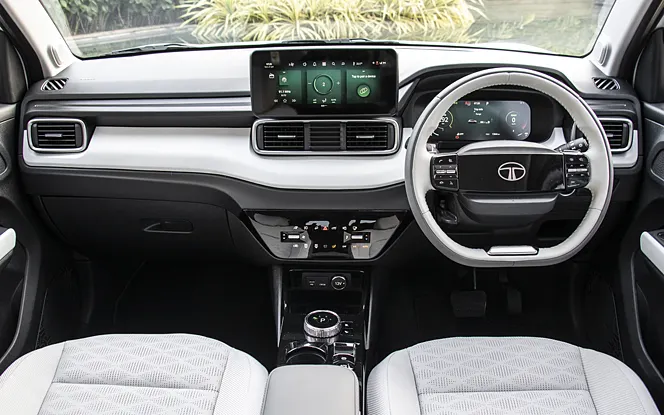
Inside the Punch EV 2025 you get a cabin that is familiar to Punch owners. Premium materials in higher trims, simple layout for ease of use, and strong visibility from all seats. Front seats are well-cushioned; rear seat space is generous for its class though very tall adults at the back may feel slightly snug on long trips. Boot space is practical for daily bags and weekend luggage; folding rear seats expands usable cargo for bigger items. Features like adjustable driver seat height, good storage compartments, wide door openings and high roof help usability. For Indian buyers who value comfortable daily driving and decent weekend utility, the cabin of the Punch EV delivers.
Also Read Maruti Suzuki Brezza 2025 – India’s Stylish and Fuel-Efficient Compact SUV
Infotainment, Connectivity and Smart Features
The Punch EV 2025 adds EV‐specific digital interfaces along with usual connected-car features. Mid and top trims offer a large touchscreen infotainment system with smartphone mirroring (Android Auto/Apple CarPlay), voice commands, navigation and EV energy flow displays (battery state, range, charger locator). Tata’s connected car tech (iRA modules) allow remote monitoring of charge status, pre-conditioning cabin temperature, tracking vehicle health, and geofencing in some variants. Higher trims also get premium audio, ambient lighting and smart drive modes. For Indian tech-savvy buyers, the Punch EV offers connectivity and daily convenience.
Battery Options, Range and Real World Performance
Tata offers the Punch EV in two primary battery sizes: one smaller pack for city use (~25 kWh) and a larger pack (~35 kWh) for longer range. Claimed MIDC ranges are impressive but remember real world ranges are lower due to driving style, AC use, load and terrain. Everyday urban drivers using the city mode and charging overnight at home will find the smaller pack totally usable. For those doing frequent highway trips or longer commutes, the larger pack gives more flexibility. Many owner reports show the 35 kWh trim doing 300-370 km in real conditions. The smaller pack delivers comfortable 200-300 km on mixed use for many users.
Charging Time and Practical Charging Tips for Indian Roads
Charging is a critical aspect of EV ownership. With the Punch EV 2025, Tata recommends home charging with a wall-mounted charger (3.3 kW or 7.2 kW). Overnight charging at home fills most of the battery for daily use. Public DC fast chargers (CCS standard) allow faster charging on highways. On a suitable fast charger, the Punch EV can go from low to ~80% in ~30-60 minutes depending on pack size and charger power. For Indian buyers it means: if you have home charging, daily use is effortless. For long drives, plan charging stops in advance. Use regenerative braking in city to recover energy. Avoid 100% charging daily for battery health; aim for 80-90% on daily use.
Performance, Drive Quality and Handling
The Punch EV 2025 delivers instant torque typical of EVs. That means smooth acceleration from rest, easy overtakes in city traffic and relaxed drive feel. While it is not built for racing, it handles urban and suburban roads confidently. The suspension is tuned for Indian road conditions—absorbing potholes and rough patches well. Steering is light and maneuverable for narrow lanes, yet the SUV stance gives a planted feel on wider roads. Drive modes may include Eco and Normal; some trims might have Sport mode. One-pedal driving via strong regeneration is useful in stop-and-go city traffic. The Punch EV thus delivers a comfortable and composed driving experience for Indian users.
Safety Features and Crash Protection
Tata has put strong emphasis on safety in its AdVantage platform. The Punch EV 2025 is built with a high-strength steel body, multiple airbags (front, side, curtain), anti-lock braking system (ABS), electronic stability control (ESC), tyre pressure monitoring, and ISOFIX child seat mounts. Higher variants may include advanced driver assist systems (ADAS) like autonomous emergency braking (AEB), forward collision warning, lane keeping assist, and high beam assist. Tata’s EVs are tested for occupant safety and the Punch EV benefits from that engineering. For Indian buyers, safety matters deeply given driving conditions and family use.
Practicality, Usability and Indian Road Conditions
The Punch EV scores well on practicality. Its compact exterior size helps in traffic and tight parking. The tall stance and high visibility help in city driving. With 5-seater capacity and decent boot, the car suits small families. Ground clearance is SUV-level which helps avoid bottoming out on rough patches. The Punch EV also benefits from Tata’s parts and service network across India. For buyers in smaller towns, that availability matters. Of course, check local EV charger availability at home and nearby public points. The car is not designed for heavy off-roading but handles typical Indian road conditions with ease.
Running Costs, Ownership Experience and Total Cost of Ownership
One of the big advantages of the Punch EV 2025 is low running cost. Electricity per km is often lower than petrol per km in India (depending on region). EVs have fewer moving parts than petrol cars, reducing maintenance. Tata also offers battery and motor warranty programs (often up to 8 years) which ease buyer concerns about battery replacement cost. When you include lower fuel cost, fewer service visits, and strong safety resale value, the Punch EV can become cheaper to own over 3-5 years compared to petrol equivalents—especially if you drive >15,000 km/year and have home charging.
Trim Levels, Features and Price in India (Indicative)
Tata offers several trim levels for the Punch EV 2025. Base trims focus on essentials; mid and top trims add convenience, connected car features and longer range battery. Prices are indicative and vary by city and state subsidies. At launch, base ex-showroom price for Punch EV was around ₹9.99 lakh in some states for the standard battery model. The long-range pack and higher features push price higher. Government subsidies, state EV policies and home charger cost affect final price. Always check for latest offers, exchange bonuses and registration incentives.
Pros and Cons of Tata Punch EV 2025
Pros:
• True small-SUV styling with electric drive.
• Low running cost and simple electric ownership.
• Good range for city use; long-range pack increases flexibility.
• Strong safety features and Tata’s service network.
• Practical size for Indian roads and parking.
Cons:
• Smaller battery pack has limited range for many highway trips.
• Public charging network still growing in some towns.
• Initial cost higher than comparable petrol cars with similar features.
• Long-distance travel still needs planning due to charging stops.
• Some rivals may offer slightly better interior refinement or larger EVs for the same budget.
Comparison with Rivals in India
The Punch EV competes with other compact EVs and micro-SUV EVs in India. Key rivals might include entry electric cars and upcoming small EVs from other brands. Punch EV’s strengths are safety, brand trust, service network and SUV form-factor. Rivals may offer longer range, faster charging or lower price—but often at trade-offs in service or features. Indian buyers should compare real-world range, home charger cost, local incentive schemes and service support before deciding.
Detailed Specification Table (Expanded)
| Specification | Details |
|---|---|
| Battery Options | ~25 kWh / ~35 kWh |
| Claimed Range (MIDC) | ~315 km (25 kWh) / ~421 km (35 kWh) |
| Motor | Permanent magnet electric motor ~90 kW (~120 PS) |
| Torque | ~190 Nm (approx) |
| Drive | Front-wheel drive |
| Charging | AC home wall-box (3.3 kW / 7.2 kW) / DC fast charging (CCS) |
| Charging Time | AC full in ~3.5–5 hours (depending on pack/charger); DC 10–80% ~30–60 minutes |
| Seating Capacity | 5 |
| Boot Space | Approx. 300+ litres (trim-dependent) |
| Ground Clearance | SUV-level (exact figure depends on variant) |
| Safety Features | Dual front airbags, side & curtain airbags (higher trims), ESC, ABS with EBD, ISOFIX, possible ADAS in top trims |
| Warranty | Vehicle 3 years; Battery & motor up to 8 years (variant dependent) |
| Price (India, 2025) | From around ₹9.99 lakh ex-showroom for base EV model |
| Service Interval | Typical EV service schedule, fewer moving parts than ICE |
| Ownership Cost | Lower fuel cost (electricity vs petrol), potentially lower maintenance |
Frequently Asked Questions (FAQs)
Q1. What is the real-world range of the Tata Punch EV?
A1. Real-world range varies with pack size, driving style and conditions. The standard battery model (~25 kWh) provides realistic city range of around 200-250 km per charge in Indian conditions. The long-range model (~35 kWh) can deliver around 300-370 km depending on use.
Q2. How long does it take to charge the Punch EV at home?
A2. With a 7.2 kW home wall-box charger, you can charge from near empty to full in about 3.5-5 hours for the smaller pack; the larger pack takes longer. Using a standard 3.3 kW charger takes more time.
Q3. Is the Punch EV safe for Indian roads?
A3. Yes. Tata built it with high safety standards and strong passive safety. Many of its safety features match higher-segment cars. Confirm the exact variant’s safety list in your region.
Q4. What is the price of Tata Punch EV in India?
A4. The price depends on battery size, features and state incentives. Indicative ex-showroom price for the base model is around ₹9.99 lakh in 2025. Higher trims cost more.
Q5. Can I use the regular Punch petrol car charger for EV?
A5. No. The EV uses different charging hardware. You need a dedicated home wall-box or compatible public charger (AC/DC) with CCS standard for fast charging.
Q6. What are the running cost savings?
A6. Electricity per km is often lower than petrol per km in India. With home charging, fewer service visits and simpler drive-train, annual savings can be significant depending on usage.
Q7. Which Punch EV variant should I pick?
A7. If you drive mostly in city and have home charger, the standard battery model is enough. If you frequently go on long trips or highway drives, choose the long-range pack.
Final Thoughts for Indian Buyers
The Tata Punch EV 2025 offers one of the most realistic, small-SUV electric options for Indian families. It blends compact design, SUV feel, practical electric range, low running cost and Tata’s safety focus. If you want to move to an EV without sacrificing everyday usability or parking ease, this car is a strong contender.
The key is to match your driving needs. If your daily commute is city-based and you can charge at home, the standard variant delivers big value. If you need more range or frequent longer trips, go for the long-range version and plan your charging stops.
Also, factor in home charger cost, electricity tariff in your city, and local EV incentives. Buyer support, service network and warranty matter too. Tata’s network gives confidence.
In short, for Indian buyers wanting an affordable electric SUV with the latest features, solid safety and a trusted brand, the Tata Punch EV 2025 is worth serious consideration.